
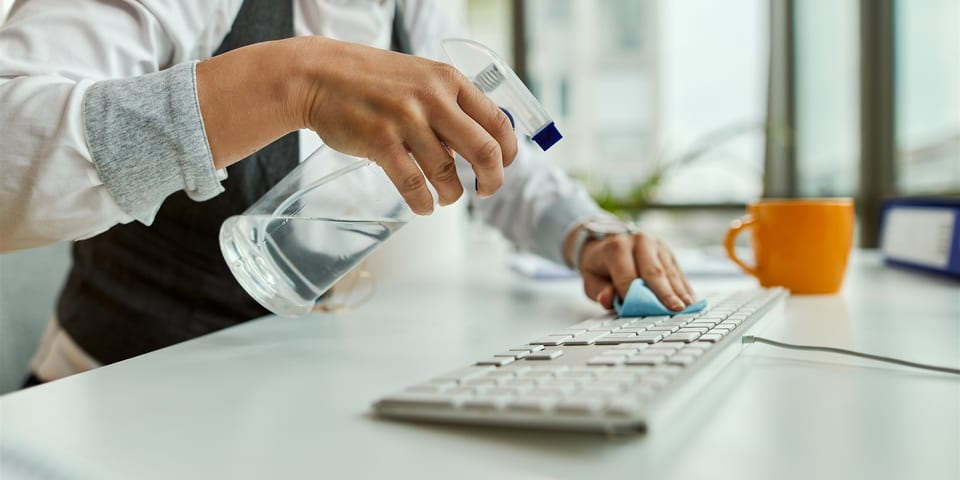
Where Germs Collect in an Office
Germs spread in an office the same way people work in one: through the things everyone touches. A cold or a stomach bug moves from hand to surface to hand, so the places that need the most attention are not always the ones that look dirty. They are the ones many people handle every day.
At a glance:
- Reception and lobby
- Washrooms
- Photocopiers and printers
- Coffee makers, water coolers and fridges
- Keypads and door handles
- Boardrooms
- Blinds and windowsills
- Hallways and stairways
- Desks and work areas
- Hand hygiene
Most of these are easy to miss in a routine clean, because they are small, they belong to everyone, or they sit out of the way.
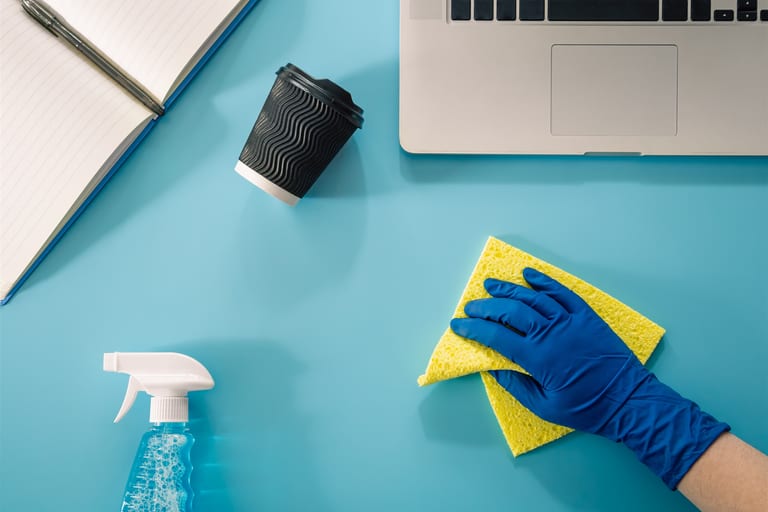
Reception and Lobby
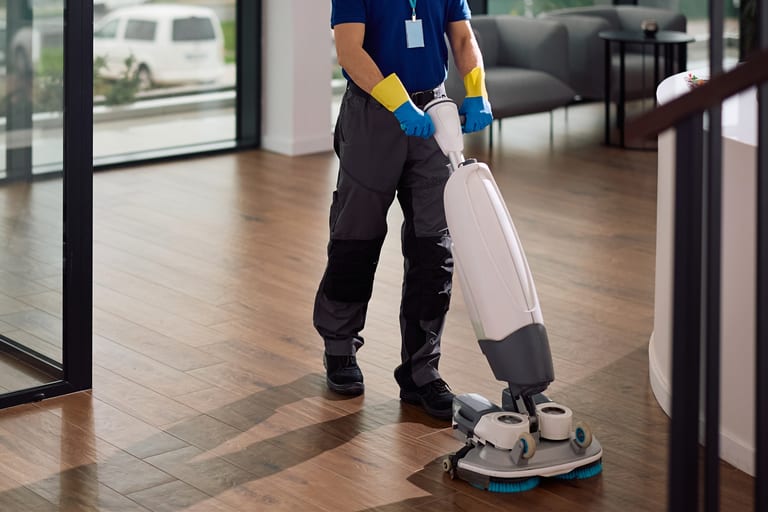
The reception area is the first thing visitors see and the place they touch most: the front door, the desk, the pen, the chairs. Everything the public handles should be cleaned and disinfected every visit, and the floor here takes more wear than anywhere else, so it is worth a machine scrub or refinish every few months.
Washrooms
Washrooms collect more bacteria than any other room in the building. Public and staff washrooms both need cleaning and sanitizing on every visit, with taps, flush handles, dispensers and door handles disinfected, and a periodic deep clean of floors, grout and partitions.
Photocopiers and Printers
Buttons, screens, paper drawers and lids are handled by many people a day and almost never cleaned. Wipe them daily with a product the manufacturer allows.
Coffee Makers, Water Coolers and Fridges
Anything in the kitchen that serves food or drink is handled all day. Coffee-maker handles, water-cooler buttons and dispensers, and fridge and microwave handles should be wiped and disinfected at least daily. Water coolers in particular are easy to forget, because they usually sit in a corridor rather than the kitchen.
Keypads and Door Handles
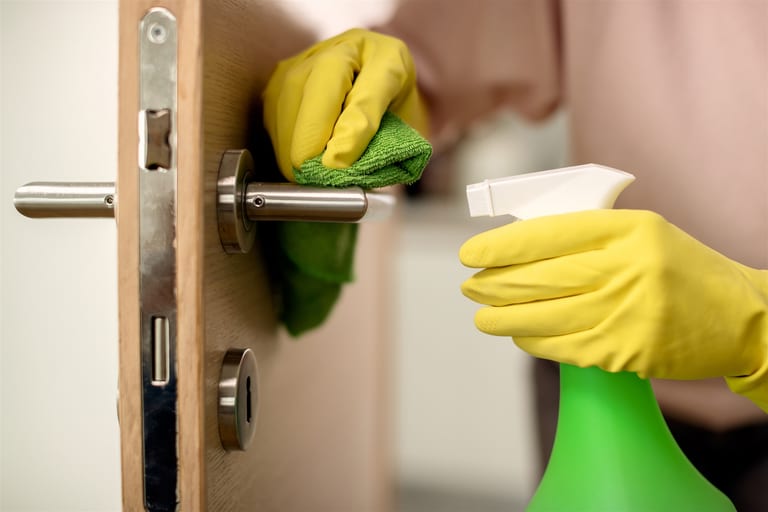
Washroom doors get attention; the rest often do not. Every door handle and push plate, keypads and fingerprint readers, and the handles on cupboards, drawers and closets are touched as often. The building’s exterior handles are touched by visitors and delivery drivers as well.
Boardrooms
Boardrooms are used by staff and visitors all day. The table, chairs, phones, remote controls and conferencing equipment should be wiped after each meeting if possible, and at least once a day.
Blinds and Windowsills
Dust settles on blinds and sills and is rarely touched until it is visible. Have them cleaned on a schedule, monthly or quarterly depending on the building, rather than when someone notices.
Hallways and Stairways
Handrails and the push bars on stairwell doors take a lot of hands. Floors should be cleaned daily and handrails sanitized daily.
Desks and Work Areas
Keyboards, mice, phones and chair arms are touched constantly by the person at the desk, and by anyone who shares it. Encourage staff to keep desks clear so cleaners can reach the surface, give them somewhere other than their desk to eat lunch, and make sure your cleaning scope says whether desks are wiped and how often. A few cleaning products worth keeping in the office let staff wipe their own desks between visits.
Hand Hygiene
Clean surfaces are half of it. Germs move from hand to surface to hand, so every hand that is not washed passes them on, and washing is the simplest way to stop a cold going round the whole team.
- When to wash. Before and after eating, after using the washroom, after sneezing, coughing or blowing your nose, and after handling anything the public shares: transit, door handles, deliveries.
- How to wash. Soap and warm water, scrubbing every surface from the wrists to the fingertips, between the fingers and under the nails, for at least 20 seconds. Dry on a clean towel, then use the towel or your elbow to turn the tap off, so you do not pick up what you just washed away.
- When sanitizer is enough. An alcohol-based sanitizer is a good substitute where there is no sink, such as a reception desk, beside an elevator or in a vehicle, and works best on hands that are not visibly dirty. Grease and grime need soap and water.
- Make it easy. Keep washrooms and kitchens stocked with soap and paper towels, put dispensers where people enter and where they share equipment, and post short reminders near sinks. A line in a team email at the start of flu season helps too.
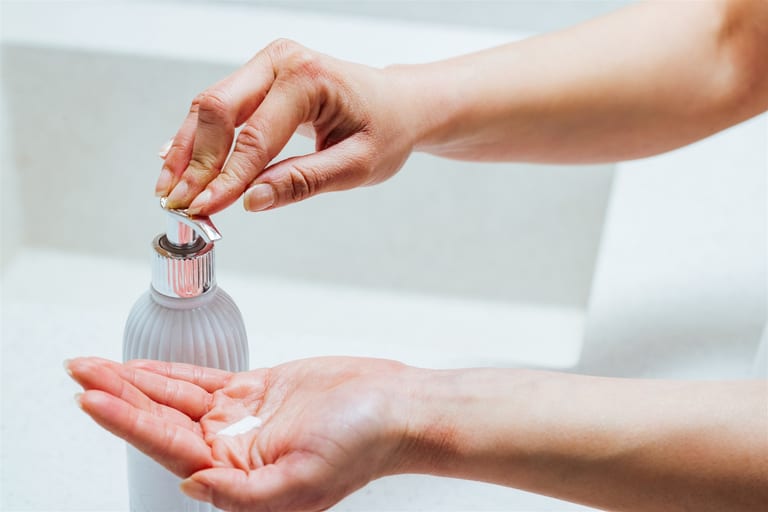
Clean hands only stay clean as long as the things they touch are, which is why the surfaces above belong in every routine visit.
Setting a Schedule
None of this needs to happen all at once. The high-touch points above belong in every routine visit; floors, blinds and a deep clean of washrooms and kitchens can be planned through the year. A quieter week, such as the end of summer or the holidays, is a good time for the deeper work, because there are fewer people in the way.
Surfaces are only half of it: dust and a neglected HVAC system affect indoor air quality across the whole office.
A professional crew works from a written scope, so nothing on the list depends on someone remembering it. Contact us to talk about yours.
Evergreen’s disinfection cleaning cleans these hotspots first and then disinfects them, as a one-off or on a schedule, for workplaces across Toronto and the GTA.