
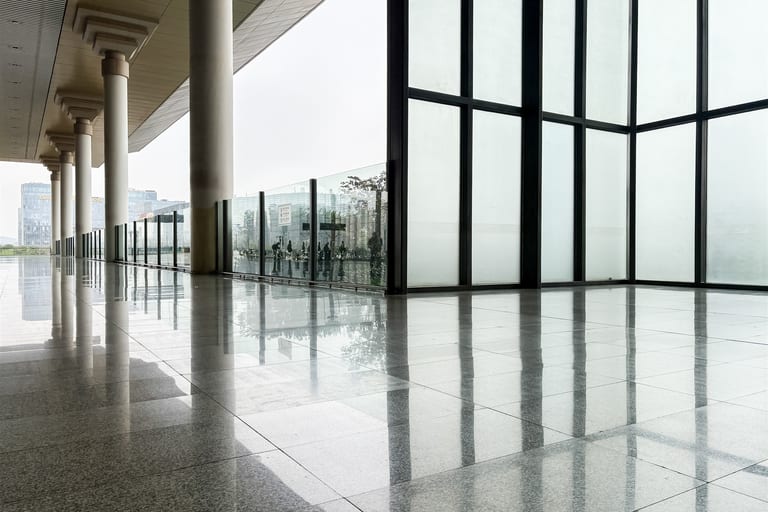
Floor stripping and waxing is removing the worn, dirty layers of finish from a hard floor (most often vinyl composition tile) and building up fresh coats of sealer and finish, so the floor is protected and shines again. Between full strips, regular scrubbing and burnishing keep the finish looking new for longer.
Why floors need it
Floor finish is a sacrificial layer: it takes the wear so the floor underneath does not. Foot traffic, grit and, in a Toronto winter, road salt scratch and dull it, and dirt gets locked into the layers. Mopping cannot reach that dirt; only removing the finish and putting new coats down brings the floor back.
A cycle, not a one-off
The cheapest floor to keep is one on a plan. A full strip and wax is the reset; machine scrubbing and burnishing between visits keep the shine and stretch the time to the next full strip; a scrub and recoat in between can put off a full strip again. Planned through the year as part of a building maintenance programme, floor care happens before a floor needs rescuing rather than after.
Winter matters here. Salt left on a finished floor etches it, so entrances and lobbies benefit from extra scrubbing through the winter and a refinish in the spring.
A sample year for a lobby floor
As an illustration, this is the shape of a plan for a busy ground-floor lobby with a vinyl composition tile floor. The real cycle depends on the floor, its traffic and how much finish is on it, which is why we look at it before quoting.
- Spring: a full strip and wax after the salt season, so the winter’s etching and residue are removed rather than sealed in.
- Early summer: machine scrubbing and burnishing on the routine visits to keep the shine; a scrub and recoat if the entrance lane is dulling.
- Autumn: a scrub and recoat before the first salt, so the floor goes into winter with fresh finish on top.
- Winter: extra scrubbing at the entrance and matting that is cleaned and changed through the season; no refinishing until the salt stops.
- Between visits: entrance mats, prompt spill response and a neutral cleaner on the routine mop, which is what stretches the time to the next full strip. Our guide to daily floor care between wax visits covers that side.
A quieter back office on the same tile might need a full strip only every two or three years, with a recoat in between. A plan like this is written into the proposal as part of a building maintenance programme, so the dates are set in advance and the floor is never rescued at the last minute.
We are bonded, insured and WSIB covered. Call (416) 803-4880 or request a walkthrough.